
For most trips, the single greenest choice you can make is to take the bus. A fully occupied motorcoach moves people using a fraction of the fuel and a fraction of the carbon of a car or a short-haul flight. If sustainable travel is your goal, the humble intercity bus beats nearly every other option on emissions per passenger, cost, and road space.
Transportation is the largest source of greenhouse gas emissions in the U.S., at about 28%. Motorcoaches average roughly 150+ passenger miles per gallon, far more than cars or planes. One full motorcoach can replace up to 55 cars on the highway, easing both emissions and congestion. Choosing the bus can cut your per-trip CO2 by up to 85% compared with driving alone.
What makes the bus the greenest way to travel?
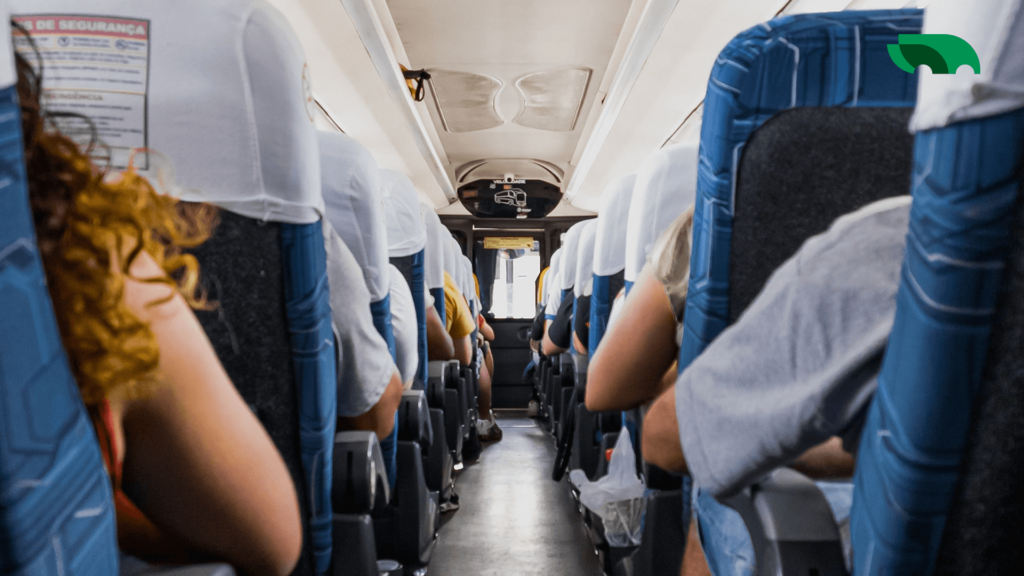 The bus wins because it spreads one engine’s fuel across dozens of passengers. Transportation now accounts for about 28% of U.S. emissions of greenhouse gases, and most of that comes from personal vehicles carrying one or two people. A motorcoach flips that math 40 to 55 riders share the same trip, so the carbon cost per person drops sharply.
Efficiency is the reason sustainable travel and bus travel go hand in hand. According to the American Bus Association Foundation, motorcoaches deliver roughly 150+ passenger miles per gallon, several times the fuel efficiency of a single-occupant car. No new infrastructure, no charging network, no runway: just a bus already running the route.
Here is how the modes stack up on carbon, using widely cited emission factors:
| Mode of travel | CO₂ per passenger mile (approx.) | Relative footprint |
| Solo in a gas car | 350 g | Highest |
| Domestic short-haul flight | 250 g | High |
| Rail | 90 g | Low |
| Intercity bus (OurBus) | 55 g | Lowest |
How much CO2 does bus travel actually save?
Switching one 300-mile round trip from a solo car to the bus can save roughly 175 pounds of CO₂ – the emissions from burning about nine gallons of gasoline. That is the practical payoff of sustainable travel: measurable savings on a single journey, repeated every time you skip the driver’s seat.
The gap widens on busy corridors. A gas car carrying one person emits close to 350 grams of CO₂ per passenger mile, while a well-occupied intercity bus lands near 55 grams. That is roughly an 85% reduction per passenger, without asking you to buy a new vehicle or change your route.
According to the ABA Foundation, motorcoaches are the most energy-efficient mode for the vast majority of intercity trips, outperforming rail on many routes once occupancy is factored in. For travelers who want impact today rather than someday, the bus delivers immediately.
Why is sustainable travel about more than emissions?
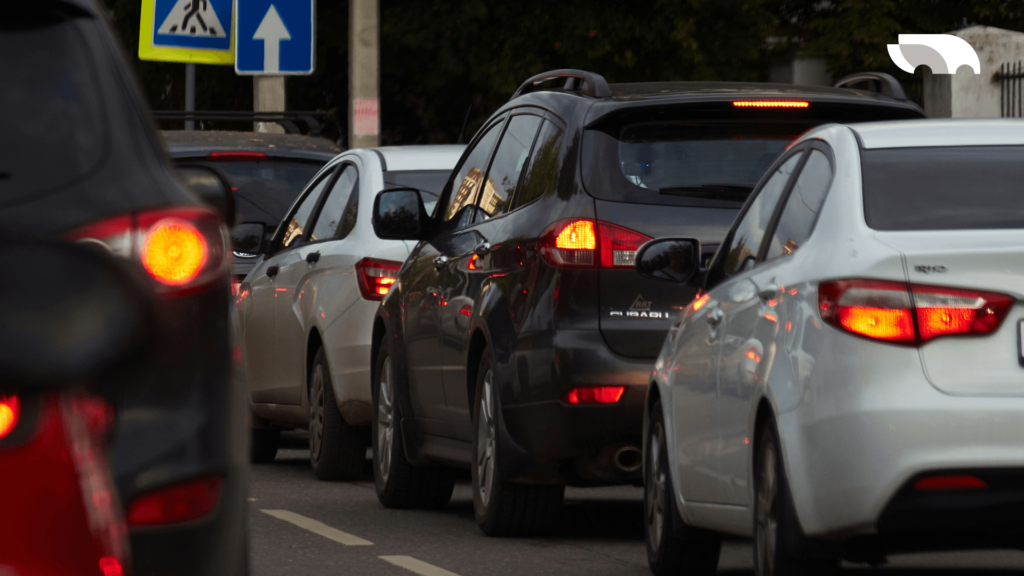 Sustainable travel is also about land, congestion, and livable cities, not carbon alone. One full motorcoach can replace up to 55 cars on the highway. That means fewer traffic jams, less wear on roads, and far less parking pavement carved out of city centers.
Think about what 55 cars require: lanes, garages, curb space, and the concrete to hold them. A single bus consolidates all of that into one vehicle and one parking footprint. Cleaner air near busy corridors follows, because fewer idling engines sit in stop-and-go traffic.
There is a social layer too. Buses keep travel affordable and accessible for people who cannot or choose not to drive, which spreads the benefits of low-carbon transport widely. When we speak with riders, the reason for the switch is rarely just guilt about emissions. It is the combination of a lower fare, no parking hassle, and a smaller footprint arriving together.
How can you make your next trip more sustainable?
The easiest win is to book the bus and let a full vehicle do the heavy lifting. Beyond that, a few habits stretch the environmental payoff of every trip you take. Sustainable travel is a series of small, repeatable choices, not one grand gesture.
Use this quick checklist before you go:
- Choose the bus for city-to-city trips under a few hundred miles, where it beats both flying and driving on carbon.
- Pick nonstop or direct routes to avoid extra miles and idling.
- Travel light, less weight means less fuel per passenger.
- Bring a refillable bottle and reusable bag to cut single-use plastic on the road.
- Fill the seats: encourage friends and coworkers to ride together instead of caravanning in separate cars.
Check out OurBus’ popular routes: NYC to DC bus, NYC to Ithaca bus, NYC to boston bus, NYC to Baltimore bus, etc.
Small habits compound. A rider who takes the bus twice a month instead of driving can avoid hundreds of pounds of CO2 a year. This is roughly the emissions saved by not burning a full tank of gas every few weeks.
Riding with a large group? Book a private bus at ourbuscharters.com.
Ready to travel greener?
 Make your next trip count. Book an OurBus ticket on ourbus.com and swap a solo drive for a comfortable, low-carbon ride with free Wi-Fi, reserved seats, and extra legroom, sustainable travel that also saves you money.
If you want sustainable travel that works today, the bus is the greenest way to go. It carries more people on less fuel, replaces dozens of cars, and cuts per-trip carbon by up to 85%, all while costing less than driving or flying. The next time you plan a city-to-city trip, choose the seat that already shares the ride.
Frequently Asked Questions
Is the bus really greener than the train?
Often, yes. On many intercity routes an occupied motorcoach matches or beats rail on CO₂ per passenger mile because it needs no dedicated track or electrified line. The ABA Foundation cites roughly 150+ passenger miles per gallon for motorcoaches, keeping the bus among the lowest-carbon options.
How much CO2 can I save by taking the bus instead of driving?
Around 85% per passenger on a typical corridor. A solo gas car emits close to 350 grams of CO₂ per passenger mile, while a well-occupied intercity bus lands near 55. On a 300-mile round trip, that is roughly 175 pounds of CO₂ avoided, or about nine gallons of gasoline.
Does bus travel help with more than emissions?
Yes. One full motorcoach can take up to 55 cars off the road, which cuts congestion, parking demand, and roadside air pollution. Sustainable travel by bus also keeps trips affordable and accessible, spreading low-carbon transport to riders who cannot or prefer not to drive.
Why is transportation such a big climate issue?
Because it is the single largest source of greenhouse gas emissions in the U.S., at about 28%. Most of that comes from personal vehicles carrying just one or two people. Shifting even a few trips a month to the bus is one of the fastest ways to shrink your footprint.



No Comments