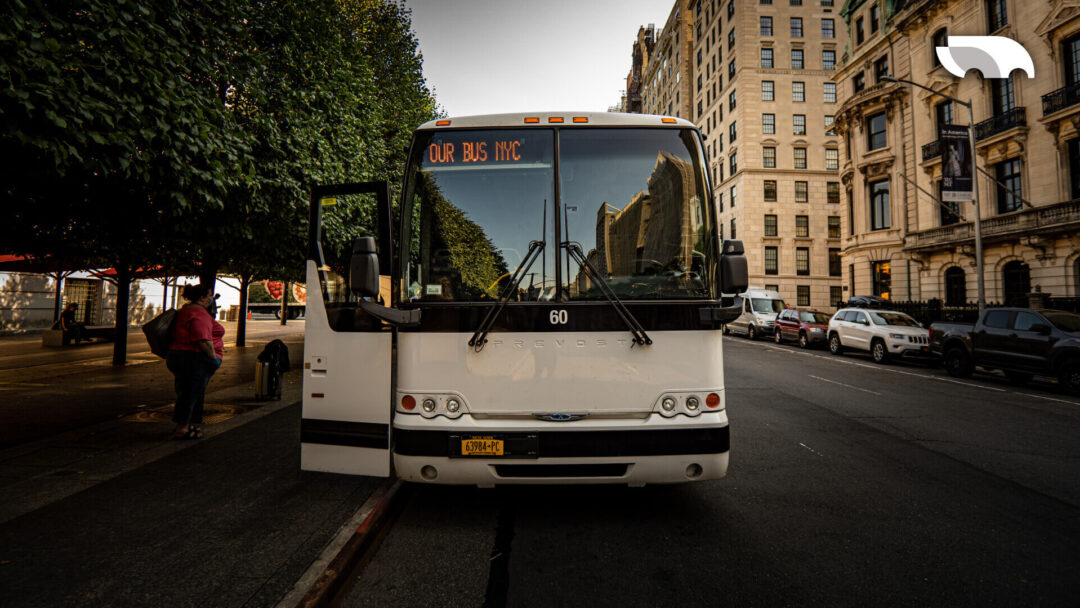
Who runs OurBus buses? A local bus company, not OurBus itself. Independent operators own the coaches and provide the drivers, and more than 80 percent of platform revenue goes to them. OurBus supplies the technology, the booking, the support and the demand data that tells those operators a route is worth running at all.
Who Runs OurBus Buses on the Road?
Established regional carriers, most of which you have never heard of. A partner operator is an independent, licensed bus company that owns the coach, provides the driver and holds its own operating authority, while the platform handles the ticketing and the customer relationship. OurBus has worked with “more than 400 bus companies across North America,” and more than 80 percent of platform revenue flows straight to the operators. Those figures come from OurBus co-founder Axel Hellman, writing in Bus & Motorcoach News in August 2026 — our own numbers, in other words, so weigh them as such. Notably, that is the opposite of how most people assume a bus brand works. There is no OurBus depot full of OurBus-owned coaches. Instead there is a network of family firms and regional charter companies, each running the roads they already know, with a booking layer sitting on top. For example, the coach that pulls up may carry a different name on the side entirely, which is not a mistake.
Here is the split, in plain terms.
| Who does it | OurBus | The partner operator |
|---|---|---|
| Owns the coach | Yes | |
| Provides the driver | Yes | |
| Holds the operating authority | Yes | |
| Spots demand for a new route | Yes | |
| Takes your booking and payment | Yes | |
| Runs the schedule on the day | Yes | |
| Rider support, 24/7 | Yes | |
| Share of platform revenue | Over 80% |
How Does a New Bus Route Actually Get Chosen?
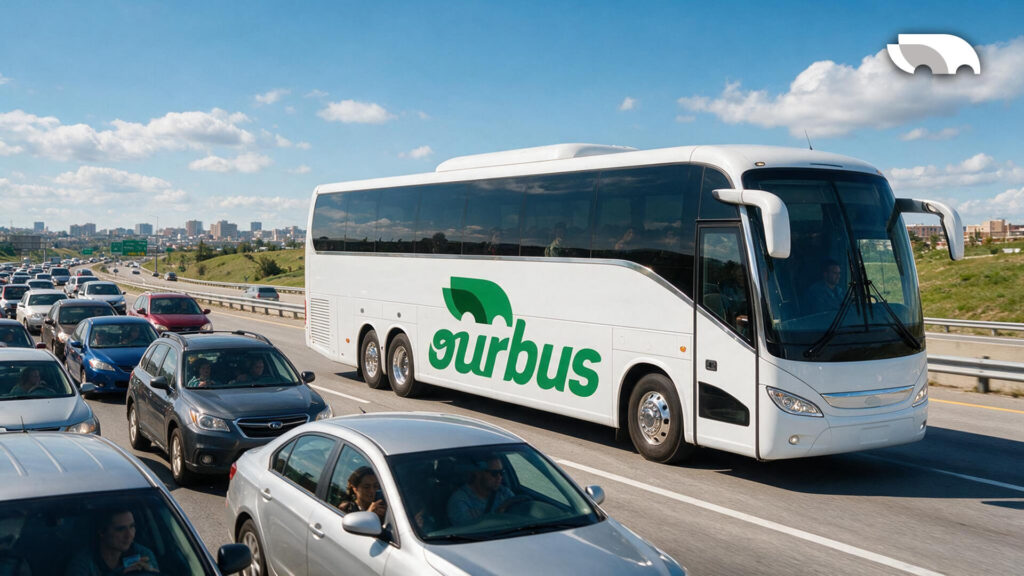
By watching where people are already trying to go. Demand data is the record of what travelers search for, when they search for it, and which trips they fail to find a seat on — and it is the raw material for a new route. Traditionally, launching scheduled service meant guessing, then committing a fleet to the guess. Consequently the routes that existed were the ones a large operator could afford to be wrong about. Hellman describes a different sequence. It starts by finding where “large numbers of people travel at the same time” in the first place. Then demand data pins down “the days and times when passengers were most likely to travel” on that corridor. Finally, the platform matches that demand to capacity an operator already has. In other words, the route is proven before the buses are committed. As a result a small company can test a corridor on a couple of departures a week instead of betting the business on it.
Why Do Buses Turn Up in Places the Big Lines Skip?
Because the math changed for small operators. A local firm with a handful of coaches used to be shut out of scheduled service: no booking system, no way to sell online, no marketing team, no way to find riders. Those were the real barriers, and none of them had anything to do with driving. Dayna Hicks, CEO of Bethany Line Tours, put it plainly in the same article. “Working with OurBus has allowed Bethany Line Tours to grow into scheduled line-run service in a way that would have been much harder to do alone. We stay focused on operating safe, reliable transportation while OurBus provides the technology, customer reach, and demand data that help make new routes possible.” For instance, that division of labor is why a firm running a handful of coaches can now hold down a scheduled corridor that once needed a national fleet behind it.
Therefore the map fills in from the bottom up rather than the top down. The network now reaches “more than 100 U.S. cities and towns,” or more than 300 destinations counted stop by stop. The newer ones tend to be places a national carrier would never expect to make money on — college towns, mid-size cities, the second stop down a corridor. Meanwhile the flagship runs stay dense. When we checked the route pages in August 2026 we found NYC to Philadelphia carrying 19 to 20 buses a day and NYC to Boston up to 20. Specifically, the model does not thin out the busy corridors to pay for the quiet ones. It adds the quiet ones because the data says they will carry, and because the company running them is usually based nearby already.
What Does It Mean If the Coach Does Not Say OurBus?
That you are on the right bus. This is the most common moment of doubt at the curb, so it is worth stating plainly: the livery belongs to the operator, and the operator is who you booked. Your confirmation and the live tracking in the app are what identify your departure, not the paint. Importantly, every operator on the network is a licensed carrier in its own right. Operating authority is the registration a bus company must hold to carry paying passengers, and for services crossing state lines it is federal and a matter of public record. Specifically, you can look up any interstate carrier by name or USDOT number in the Federal Motor Carrier Safety Administration’s SAFER Company Snapshot database and read its safety rating and inspection history. That is a useful habit for any bus travel, not only ours.
Why Do a Few Routes Have Slightly Different Rules?
Because a marketplace is not a monolith, and this is the honest cost of the model. Most of the network runs on common terms, but a handful of operators keep their own — a different cancellation window, say, or a different rescheduling cutoff. In contrast, a single-fleet carrier can apply one rule everywhere because it owns everything. So check the operator named on your booking if a policy matters to your plans. The name appears on your confirmation, so you do not have to go hunting for it. The cancellation policy page lists the exceptions operator by operator. Alternatively, if your dates are firm and you do not expect to move them, none of this will ever come up.
What Does the Model Mean for You as a Rider?
Three things, concretely.
- The money mostly stays with the company doing the driving. Over 80 percent of platform revenue, and nearly $250 million generated for independent operators to date.
- Coverage grows in the direction riders pull it. So the useful question, when your corridor has no service, is not whether it will ever be added but how many people are asking for it.
- The driver and the coach come from a regional specialist, a company whose whole business is the roads you are traveling on.
That said, it also means things vary more than they would on a single owned fleet. In fact that is the trade: a wider map, run by locals, against the sameness of one national brand. For most trips on the busy corridors the difference is invisible, and on the thin ones the alternative was usually no bus at all.
Check fares and book your OurBus ticket — or read the first-time rider’s guide if you want the booking and boarding detail. Moving 20 or more people? A charter quote works differently again.
Frequently Asked Questions
Does OurBus own its own buses?
No. OurBus is a technology platform, and the coaches are owned and operated by independent licensed bus companies. OurBus has worked with more than 400 of them across North America, and over 80 percent of platform revenue goes directly to the operators.
Is OurBus a real bus company?
It is a real transportation service, but not a fleet owner. Think of it as the booking, technology and support layer, with established regional carriers running the vehicles. That structure is why the network reaches more than 300 destinations nationwide.
Who do I contact if something goes wrong on my trip?
OurBus rider support, which runs 24 hours a day, handles the booking side regardless of which operator runs your coach. Anything about the vehicle itself is the operator’s, but you do not need to work out which is which before you get in touch.
How does OurBus decide which routes to launch?
From demand data rather than guesswork. The platform looks for places where large numbers of people are traveling at the same time, then identifies the days and times they want to travel. It matches that demand to an operator with capacity available, so a route is tested before a fleet is committed to it.

No Comments