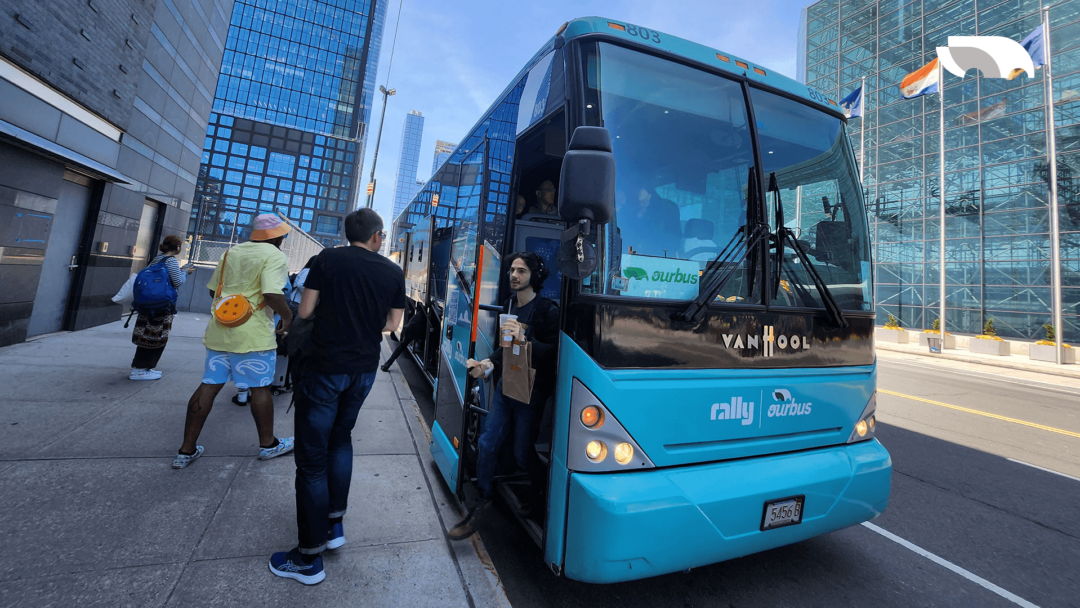
Good bus travel etiquette comes down to one idea: a coach is shared space, so keep your footprint small. In practice that means a phone on silent, headphones in, one seat and one bag, gentle reclining, a clean space behind you, and a friendly nod to the driver.
Most bus etiquette is never posted anywhere! It lives in the quiet glances between strangers who just want a peaceful ride. Planning a trip while you read? Line up your route on ourbus.com.
Why Does Bus Etiquette Matter More Than Ever?
Because the bus is busier than it’s been in years. US intercity bus ridership was projected to grow about 4% in 2025, faster than air travel (2.8%) or driving. More full coaches means more shared armrests, more phones, and more chances for one inconsiderate rider to sour everyone’s trip.
And riders notice. About 4 in 10 Americans already say people are too loud on public transportation – so the etiquette below isn’t fussy; it’s the difference between a restful ride and a stressful one.
The 12 Rules at a Glance:
Here’s the whole code on one screen. Screenshot it before your next trip.
| # | The rule | Why it matters |
| 1 | Phone on silent, calls quiet | Speakerphone is the #1 pet peeve |
| 2 | Headphones, always | 57% are annoyed by out-loud audio |
| 3 | One person, one seat | Bags don’t get a seat on a full bus |
| 4 | Recline gently, check behind | Prevents the classic recline conflict |
| 5 | Board in order, pass ready | Keeps everyone on time |
| 6 | Bags within your allowance | Clear aisle, faster boarding |
| 7 | No strong-smelling food | Smells fill a sealed cabin |
| 8 | Respect armrest & space | Shared space needs give-and-take |
| 9 | Leave your seat clean | Take your trash; respect the restroom |
| 10 | Offer priority seats | For those who need them most |
| 11 | Indoor voice, esp. early/late | 4 in 10 say transit is too loud |
| 12 | Be kind to driver & riders | Courtesy makes the whole ride better |
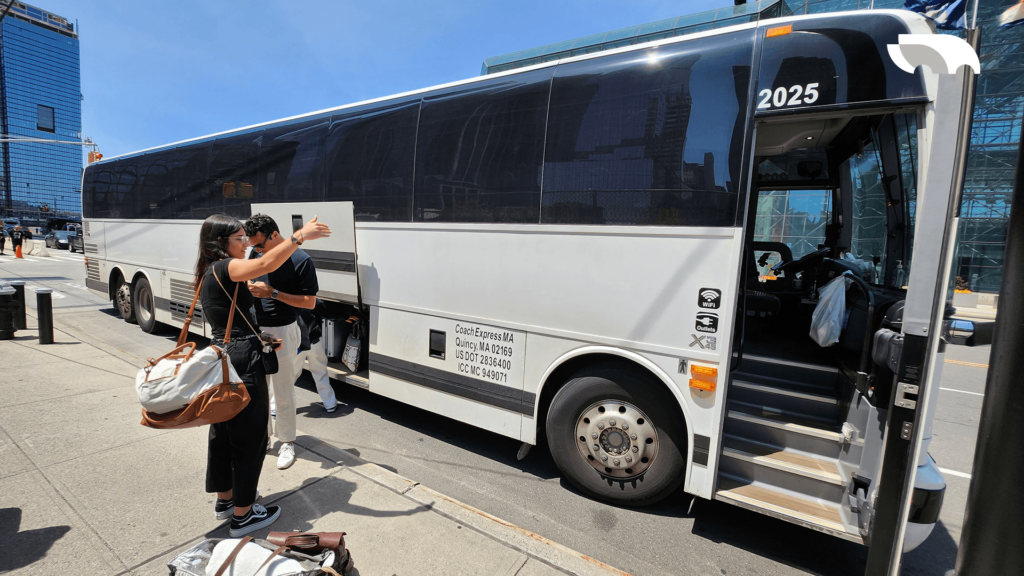
Book your trips in advance. Popular OurBus routes: NYC to DC bus, Ithaca to NYC bus, NYC to Niagara bus, NYC to Philly bus, NYC to Boston bus, etc.
What Are the 12 Unwritten Rules of Bus Travel Etiquette?
Here are the intercity bus etiquette rules that no one gives you but that everyone keeps track of. They’re ordered roughly by how often they get broken, starting with the big one: noise.
-
Put your phone on silent and take calls quietly
This is the cardinal rule of public transportation etiquette.Talking on speakerphone is the single most annoying phone behavior Americans cite. 58% name it, yet 37% admit doing it in public anyway. Switch your ringer to silent, keep calls short and low, and never hold a conversation on speaker. The whole cabin can hear you; assume they’d rather not.
-
Wear headphones – always!
Your playlist, podcast, or show is for you alone. Approximately 57% of Americans are annoyed by people playing audio without headphones, and even *with* headphones, keep the volume low enough that it doesn’t leak to the seat beside you. On a modern coach with free WiFi like OurBus, download or stream all you want but just keep the sound inside your own ears.
-
One person, one seat
Your bag doesn’t get its own seat while people are standing or searching for a spot. Keep coats, backpacks, and personal items on your lap or under the seat in front of you, and slide over to the window if someone needs to sit. Claiming two seats on a filling bus is the fastest way to become the ride’s villain.
-
Recline gently and glance back first
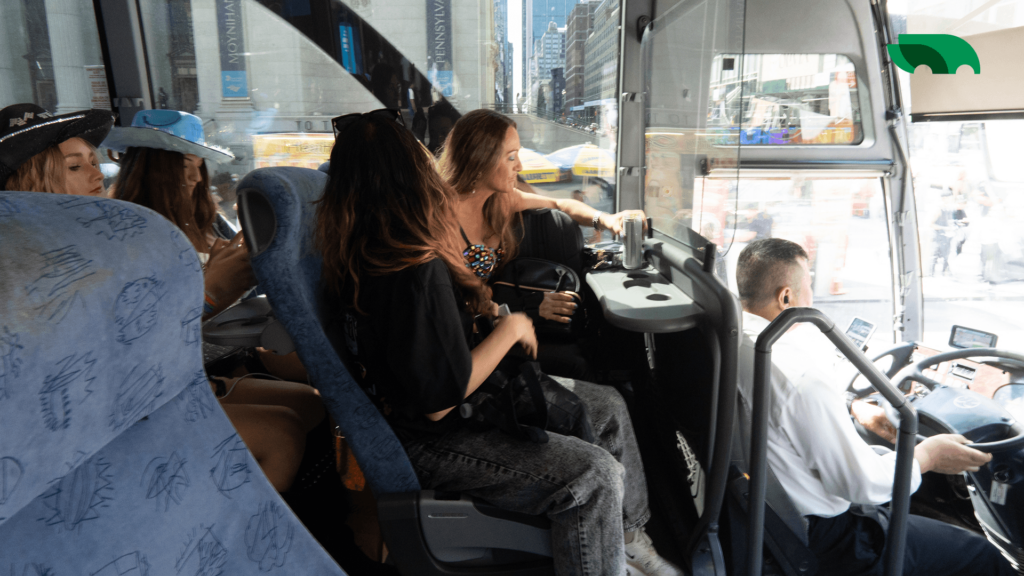
Reclining isn’t forbidden, but doing it fast and all the way, without warning, is where reclining seat etiquette goes wrong. Ease the seat back slowly and only partway, and check that the person behind you doesn’t have a laptop or drink on their tray. A quick “mind if I recline?” turns a flashpoint into a non-event.
-
Board in order, with your pass ready
Have your mobile pass open *before* you reach the door. On the OurBus app it’s under “My Passes”; no printing is required. Arrive at least 15 minutes early, queue in the order people arrived, and don’t crowd the door. A smooth boarding line gets everyone, including you, seated and moving on time.
-
Keep your bags to your allowance
One bag below, one with you. OurBus allows one suitcase up to 50 lbs / 62 inches stowed underneath, plus one personal item on your lap. Don’t sprawl luggage across the aisle, block the overhead, or wedge an oversized bag where it doesn’t fit. Tidy bags keep the aisle clear and boarding fast.
-
Skip the strong-smelling food
A quiet snack is fine; a hot, pungent meal is not. Strong food smells are a well-known travel pet peeve in a sealed cabin; tuna, fast food, and anything heavily spiced fill the whole bus. Save the real meal for the rest stop or your destination, and go for something neat and low-aroma onboard.
-
Respect the armrest and personal space
Shared armrests, shoulders, and knees need a little diplomacy. Keep elbows and legs within your seat width, don’t lean into a sleeping stranger, and resist the urge to peer at a seatmate’s screen. On a full coach, everyone gives a little; that’s what makes the shared space work.
-
Leave your seat cleaner than you found it
Take every wrapper, cup, and tissue with you when you get off. If the coach has an onboard restroom like OurBus coaches do, leave it as you’d want to find it. Drivers turn buses around fast; a rider who cleans up after themselves keeps the whole fleet pleasant.
-
Give up priority seats when they’re needed
Seats near the front exist for riders who need them most – older passengers, people with disabilities, parents with small kids, and anyone visibly struggling. If you’re able-bodied and someone needs the spot more, offer it without being asked. It’s the oldest rule in transit for a reason.
-
Use your indoor voice – especially early and late
Conversation is welcome; a loud one isn’t. On red-eye and early-morning departures, half the bus is trying to sleep, so drop to a near-whisper. This is where the “4 in 10 say people are too loud” statistic is won or lost. Match your volume to the mood of the cabin.
Riding with a group? Charter a bus! Get a custom quote from ourbuscharters.com
-
Be kind to your driver and fellow riders
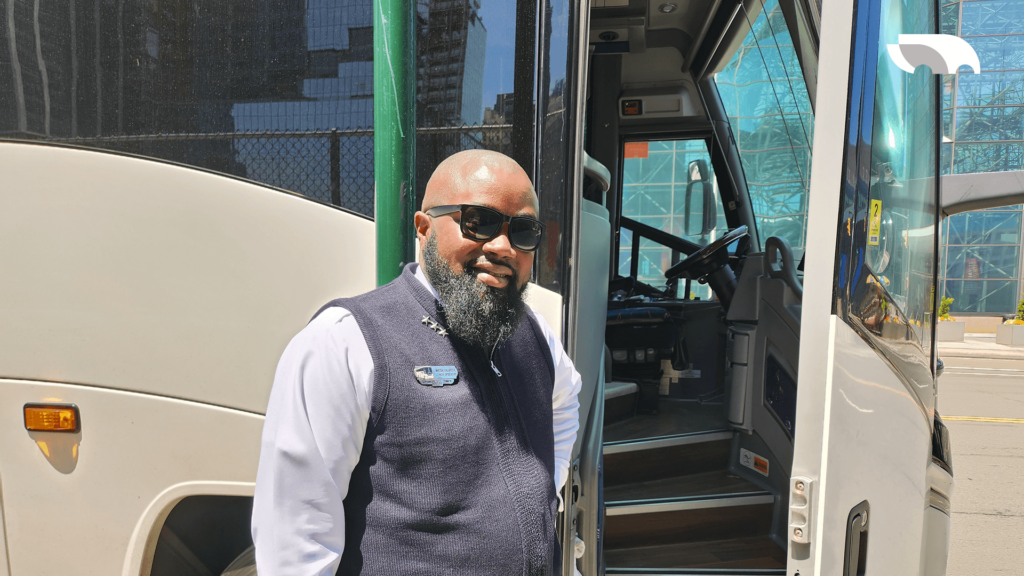 Simple human courtesy carries the whole trip. Greet and thank your driver, be patient if a curbside stop runs a minute late, help a struggling passenger with a bag, and assist newcomers in finding the coach. The best rides feel less like strangers in a tube and more like a group quietly supporting each other.
The quick tips:
- Quiet wins: silence your phone, wear headphones, and use an indoor voice.
- Space is shared: one seat, tidy bags, and respect the armrest.
- Be considerate: recline gently, skip smelly food, and offer priority seats.
- Leave it better: take your trash and thank the driver.
What’s the One Rule That Covers All the Others?
Leave your seat and everyone else’s trip the way you’d want to find them. Every rule above is just a specific version of that single idea: keep your noise, your bags, your smells, and your space small enough that the person next to you barely notices you’re there. Nail that, and you’ve mastered bus etiquette without memorizing a list.
Frequently Asked Questions
1. Is it rude to recline your seat on a bus?
Not if you do it considerately. Reclining is allowed, but doing it fast, fully, and without warning is what people find rude. Gentle reclining seat etiquette keeps the peace.
2. What is the most common bus etiquette mistake?
Noise. Roughly 4 in 10 Americans say people are too loud on public transportation, and 58% rank speakerphone calls the most annoying phone behavior of all. Keeping your phone on silent and wearing headphones fixes the single biggest complaint.
3. Can I eat on an intercity bus?
Usually yes, but keep it neat and low-aroma. Quiet snacks are fine; strong-smelling foods like fast food or heavily spiced meals are a common travel pet peeve because the smell fills a sealed cabin. Save the real meal for a rest stop, and always take your trash with you.
4. How early should I arrive to board politely?
Arrive at least 15 minutes before departure so the boarding line stays smooth and on time. Have your mobile pass open before you reach the door, and queue in the order riders arrived rather than crowding the entrance.
5. Do I have to give up my seat for other passengers?
If you’re able-bodied and someone needs it more – an older rider, a person with a disability, a parent with a small child – offering your seat is basic transit courtesy. Priority seats near the front are specifically meant for riders who need them most.



No Comments