
You can get around the entire East Coast without owning a car by chaining together intercity buses and each city’s transit system. OurBus links New York, Philadelphia, Washington, DC, Boston, the Jersey Shore, and Ithaca with fares from $9, and every one of those cities has a subway, light rail, or walkable core waiting on the other end. No car, no parking, no problem. Read on to know how to get around the east coast without a car.
Here’s the thing most people miss about the East Coast: it’s the one part of America genuinely built for life without a car. Cities sit close together, the intercity bus network is thick, and once you arrive, you can walk or ride transit almost everywhere. So how do you actually string it all together into a trip? Let’s map it out, city by city.
Can You Really Get Around the East Coast Without a Car?
Yes! The East Coast is the easiest region in the country to travel car-free. The Northeast Corridor packs major cities within two to five hours of each other, and intercity bus ridership was projected to grow about 4% in 2025, outpacing both air and auto travel as costs climbed. The demand reflects how well the network already works.
The math favors leaving the car behind, too. Owning and operating a new vehicle runs about $12,297 a year once you count payments, insurance, fuel, and maintenance. For a traveler, that’s a recurring cost the bus replaces with a fare that starts at $9.
Car-free travel isn’t a compromise on the East Coast – it’s an advantage. In a region of $40 parking and gridlocked bridges, not having a car is often the faster, cheaper way to move.
On the East Coast, car-free travel means combining two layers: intercity buses to move between cities and local transit to move within them. OurBus handles the first layer across the Northeast Corridor; the region’s subways, light rail, and walkable downtowns handle the second – no rental counter required.
Which East Coast Cities Are Easiest to Reach by Bus?
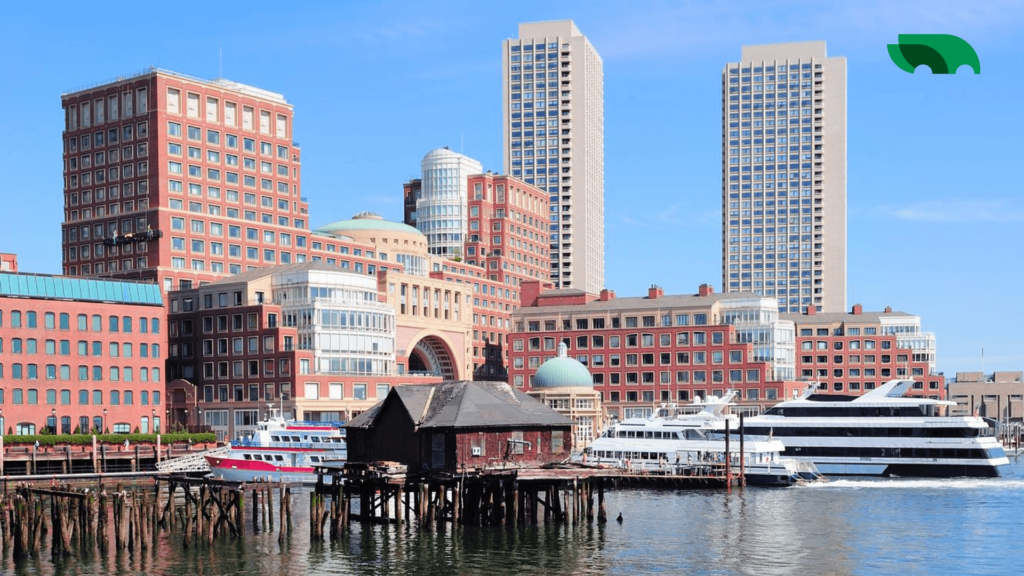 The core Northeast Corridor cities are all a short OurBus ride apart. From New York City, you can reach Philadelphia in about two hours and Washington, DC or Boston in four to five – with fares starting from $9, $17, and $19, respectively. No other region offers this many big cities so close together.
| Destination | OurBus route | Ride time | Starting fare | Why go car-free here |
| Philadelphia, PA | NYC to Philadelphia Bus | Approx 2 hrs | from $9 | Walkable core, cheap day trip |
| Washington, DC | NYC to Washington, DC Bus | Approx 4–4.5 hrs | from $17 | Free Smithsonians, strong Metro |
| Boston, MA | NYC to Boston Bus | Approx 4–4.5 hrs | from $19 | Compact, historic, ‘the T’ |
| Jersey Shore, NJ | NYC to Atlantic City Bus | Approx 2.5–3 hrs | from $19 | Beaches without Parkway traffic |
| Ithaca & Finger Lakes, NY | NYC to Ithaca Bus | Approx 4–5 hrs | from $25 | Gorges, lakes, wineries |
Please note: Fares move with demand. For the exact price, hit ourbus.com .
According to OurBus route data, a carless traveler can connect New York, Philadelphia, Washington, DC, Boston, the Jersey Shore, and Ithaca on a single network with fares from $9. That coverage turns the Northeast Corridor into one continuous, car-free itinerary you can build in any order.
How Much Does Car-Free East Coast Travel Cost vs. Owning a Car?
Going car-free saves thousands a year. Owning and operating a new car costs about $12,297 annuall, while a carless traveler pays only per trip – OurBus fares from $9 to $25, plus a few dollars for local transit. You pay to travel, not to park a depreciating asset.
| Cost | Own a car | Travel car-free |
| Baseline | ~$12,297 / year (AAA, 2024) | $0 — you pay only when you travel |
| A trip to another city | Gas + tolls + $30–40 parking | OurBus from $9–$25 |
| Getting around town | More parking + more gas | $2–3 subway/bus fare |
| Fuel (round trip ~230 mi) | ~$70 in gas at $3.88/gal | Included in your fare |
So the car-free traveler isn’t just skipping one expense – they’re skipping the whole $12,297-a-year model and paying only when they actually go somewhere. On the East Coast, where transit is dense and distances are short, that trade-off is usually worth it. Read how to plan a budget summer vacation by bus!
How Do You Get Around Once You Arrive Without a Car?
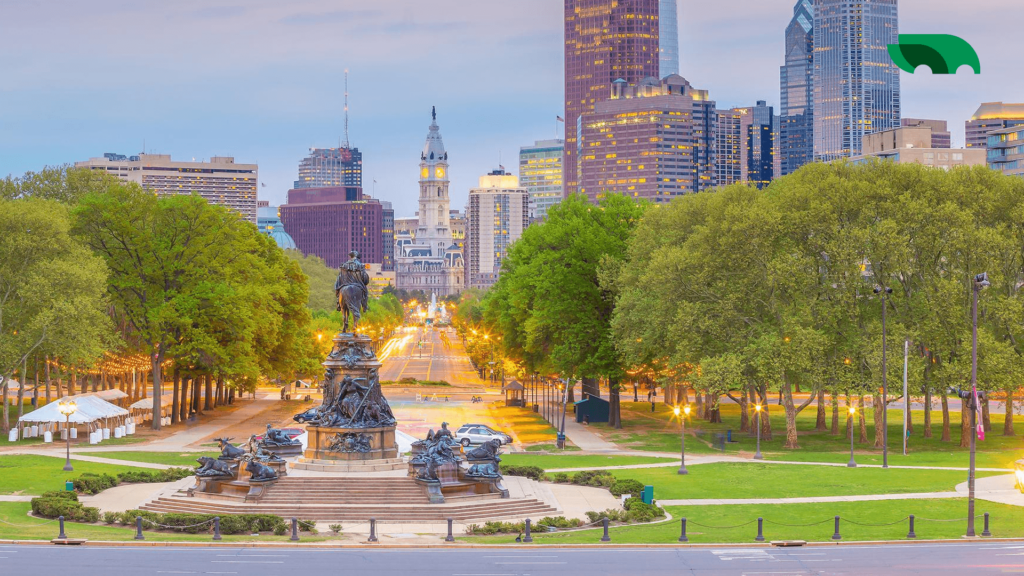 Every major East Coast city runs a transit system that reaches its airports, downtowns, and neighborhoods, so you rarely need a car after you step off the bus. The trick is landing at a central OurBus stop and switching straight to local transit – no rental counter, no parking garage, no detour.
Here’s how the big four move you around once you arrive:
- New York City: the subway runs 24/7 and reaches nearly everywhere; most trips are faster underground than by car.
- Washington, DC: the Metro is clean and tourist-friendly, linking the monuments, museums, and neighborhoods on a few simple lines.
- Boston: ‘the T’ (MBTA) is compact and walkable-adjacent; the city’s small footprint means you’ll often just walk.
- Philadelphia: SEPTA buses, trolleys, and subways cover a downtown that’s already one of the most walkable in the country.
The pattern repeats up and down the coast: arrive by bus, then walk or ride transit. A day pass on any of these systems costs a few dollars – pocket change next to the $30-to-$40 you’d spend parking a car downtown for the same day. Why circle the block for a garage when the train drops you at the door?
What Should a Carless Traveler Pack and Plan For?
Car-free travel rewards packing light and planning the first and last mile. Since you will be walking between the bus stop and transit, a backpack and a carry-on are better than wrestling a big suitcase up subway stairs. A little planning turns two transit layers into one smooth door-to-door trip.
A few field-tested habits make it effortless:
- Book your OurBus seat early for the lowest dynamic fare, and note the exact pickup and drop-off stop.
- Pack light – a backpack plus a carry-on moves easily through stations and onto local transit.
- Load each city’s transit app and map your route from the OurBus stop to your first destination.
- Carry a charger; OurBus has power outlets, and you’ll lean on your phone for tickets and maps all day.
- Build in buffer time for transfers between the intercity bus and local transit, especially at rush hour.
Do this once, and it will feel natural. With free cancellation or rescheduling up to 60 minutes before departure, OurBus also leaves room for plans to shift mid-trip – handy when a museum runs long or a beach day stretches out.
Frequently Asked Questions
1. Can you travel the East Coast without a car?
Yes, easily. The Northeast Corridor packs major cities two to five hours apart, and OurBus links New York, Philadelphia, DC, Boston, the Jersey Shore, and Ithaca from $9. Each city then has its subway, light rail, or walkable core, so you rarely need a car after you arrive.
2. How much does going car-free actually save?
A lot. Owning and operating a new car costs about $12,297 a year, while a car-free traveler pays only per trip – OurBus fares from $9 to $25 plus a few dollars for local transit. If you skip the car, you will save most of that annual cost.
3. Which East Coast cities are easiest to reach by bus?
From NYC, Philadelphia is about two hours away, and Washington, DC, and Boston are four to five, with OurBus fares from $9, $17, and $19. The Jersey Shore and Ithaca round out the network. All connect on one system, so you can plan a multi-city trip car-free.
4. How do you get around each city without a car?
Use local transit: New York’s 24/7 subway, Washington’s Metro, Boston’s MBTA (‘the T’), and Philadelphia’s SEPTA all reach downtowns and neighborhoods for a few dollars a ride. Landing at a central OurBus stop lets you switch straight to transit – no rental car or parking garage needed.
5. Is bus travel reliable enough to rely on without a backup car?
For the dense Northeast, yes. Intercity bus ridership grew about 4% in 2025, faster than air or auto travel, on the strength of frequent Corridor service. OurBus also offers free cancellation up to 60 minutes before departure, so plans can shift without a car as backup.
6. The Bottom Line for the Carless Traveler
The East Coast is the best place in America to travel without a car – and doing so can save you the roughly $12,297 a year one costs to own. Chain OurBus rides between cities with each city’s transit inside them, and the whole region opens up for the price of a few bus fares.


No Comments