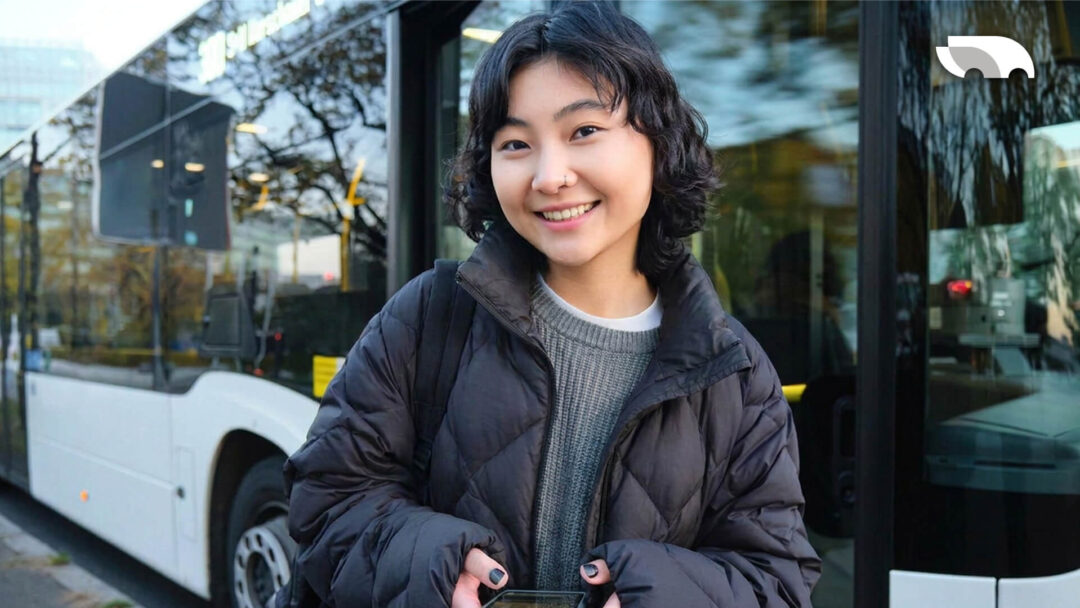
Dress for the sidewalk first. We ask you to be at your stop at least 15 minutes before your scheduled departure, and on a good many of our routes that stop is a described position on a public street with nothing whatsoever built over it. That wait, rather than the ride, is the part of the journey genuinely worth planning your clothes around.
Then you board, settle into a seat for the remainder of the trip, and whatever you have taken off has to travel either on your lap or in the shallow overhead rack above you. Those two circumstances, taken together, decide most of what you should be putting on before you leave the house.
How long are you outside, and where?
At least 15 minutes, on your feet, and the answer to “where” varies a great deal across our network.
Some of our stops sit inside buildings, such as a numbered gate at a terminal or a slip at a transit station, which gives you somewhere indoors to stand while you wait for boarding to start. Others are exactly what the word suggests. Our Hudson Yards pickup, which is one of several New York boarding points we publish, is a stretch of 11th Avenue identified by the building it stands in front of, so a wait there happens entirely in the open air with nothing overhead. So which kind have you booked? That is the single most useful thing to establish before you decide what to wear, and it takes about ten seconds to check on the route page.
| Comparison | At the curb | In the seat |
|---|---|---|
| How long | At least 15 minutes, on your feet | The length of your trip, seated |
| Cover | Open air at a street stop; indoors at a terminal or station | Enclosed, with a reclining seat and a restroom |
| Your coat | Doing the work | Needs somewhere to go |
One caveat before any of the clothing advice, because it genuinely matters more than the rest of it: the 15 minutes is a minimum, not a maximum. Traffic and weather can both delay a coach, and if that happens then your time standing outdoors becomes effectively open-ended. Check the published forecast for whichever city you are departing from, dress deliberately for longer than the scheduled wait, and treat everything recommended below as secondary to the straightforward business of being warm enough.
We built this guide around that first column, because it is the only stretch of the trip where you are outdoors and not moving.
Why does a stationary wait change which coat you need?
Because a coat originally chosen for a brisk walk to the subway is being asked to do a considerably different job the moment you stop walking anywhere.
The jacket that felt about right as you closed your own front door can feel distinctly thin by the time the coach eventually pulls in, and that is before you factor in the possibility of a delay. So what is the question to ask yourself? Whether you will still be comfortable in that coat after fifteen minutes or more of standing in one place, which is a harder test than the walk to your stop.
What happens the moment you board?
The problem reverses itself almost immediately, which is the complication at the heart of dressing for any bus journey in winter.
You step out of the weather and into a seat that you will be keeping for the remainder of the trip. Our own guide to making a long bus ride comfortable is blunt about the cabin: buses run cold, and a light layer earns its place in your bag. The upshot is that you are undressing for somewhere in between a warm room and an exposed sidewalk, which is an awkward specification for any single garment to meet. The complication on top of that is storage. Under our luggage rules, one suitcase travels in the cargo hold while one bag stays with you, and a coach overhead rack is shallow. There is also no mid-journey visit to the hold, so anything you peel off when you sit down is something you will be holding, sitting on, or wedging overhead until you arrive at your destination.
The outer layer is therefore the awkward item: the garment you most need on the sidewalk, and the one with the least obvious home once you are in your seat.
So what should you actually wear?
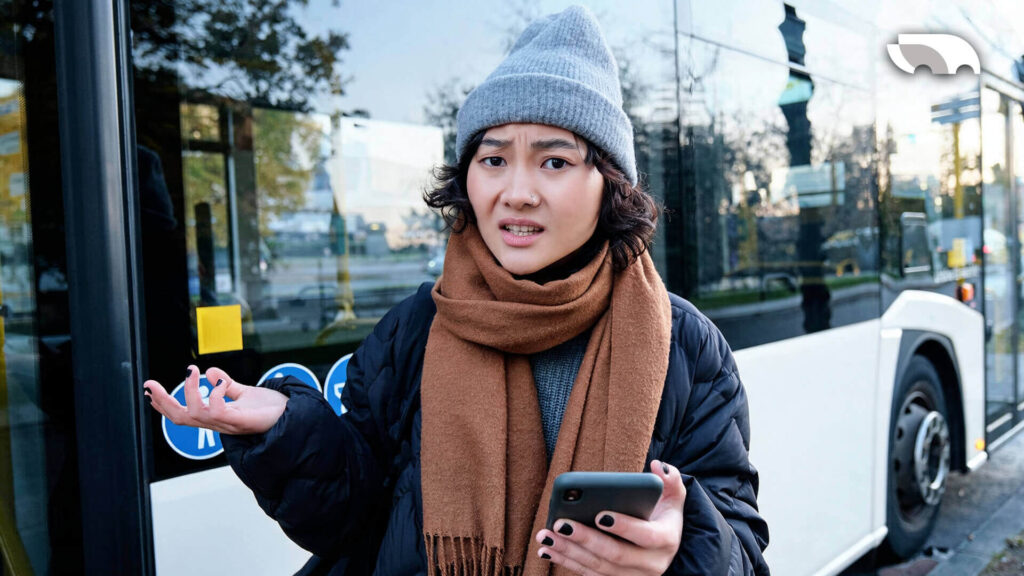
Layers that collapse, which usually means choosing smaller ones.
- A warm outer layer you can pack down. Something warm that compresses into your bag saves you nursing a bulky coat all trip. In a hard cold snap, take the bulky coat anyway — being warm at the curb wins.
- A mid layer you are happy to keep on. This is the garment that stays with you after the coat comes off, so choose it with the seat in mind.
- A scarf, and your hood too if there is weather about. A scarf packs away to almost nothing, which a hood attached to your coat will not. The hood is still what handles wind and rain at an uncovered stop, so bring both when the forecast calls for it.
- Shoes you can sit in. Boots that suit a cold curb can be uncomfortable over a long ride. Warm socks help, and you can loosen the laces once you are seated.
- Gloves somewhere you can reach them. Consider the ninety seconds between the curb and your seat: gloves are what you want in that window, and the first thing to migrate to the bottom of a bag.
Our seats recline, with charging ports at the seat and an onboard restroom, so there is no difficulty about getting comfortable once you are actually aboard. The aim is simply to dress in such a way that getting comfortable does not turn into a wrestling match with your own coat.
How do you spend less time waiting outside?
Two habits help, and neither of them involves being away from your stop.
- Use live tracking to decide when to leave home. Our trips are trackable in the app, so you can time your walk or ride to the stop and still be there by the 15-minute mark. The coach will not wait for someone who is somewhere else.
- Read your stop description before you set off. We publish each pickup point in detail, so you can see whether you are heading for a building or an open curb, and dress accordingly. Your boarding point is confirmed when you book.
Obviously neither habit does anything about the weather itself, but together they tell you exactly what conditions you are walking into before you have committed to a coat.
Does any of this change for a group?
The clothing advice holds perfectly well, but waiting together is considerably harder. A group riding a scheduled coach waits at a public stop, and a curbside pickup offers no room indoors in which to gather everybody, which becomes a noticeably different experience once the temperature drops.
If your group would rather be picked up somewhere warm and dry, that is a charter rather than a scheduled seat. Our charter arm covers it through shuttle bus rental. Otherwise, check fares and book your trip and read the stop description twice before you choose your coat.
Frequently Asked Questions
How early do you have to arrive at an OurBus stop?
We ask riders to be at the stop at least 15 minutes before the scheduled departure time. Treat that as a minimum, since a delayed coach extends the wait, and dress for standing outdoors unless your stop happens to be inside a terminal or station.
Are OurBus stops indoors or outdoors?
Both, depending on the route. Some of our stops are gates or slips inside terminals and transit stations, and many others are described positions on a public street with nothing built over them. Your route page gives the pickup point in detail, and your booking confirms which applies.
Do OurBus coaches get cold?
Our own long-ride guide tells riders that buses run cold and that a light layer is worth packing. Dress so you can take the outer layer off once you are seated and still be comfortable for the rest of the journey.
Where do you put your coat on the bus?
On your lap, in the bag you keep with you, or in the overhead rack, which on a coach is shallow. Our luggage rules allow one suitcase in the cargo hold and one bag with you, and the hold is not accessible mid-journey, so plan for the coat to stay with you.
What should you dress for on a bus trip in winter?
The wait, before the journey. The seated part of the trip is sheltered, while the 15 minutes beforehand may be spent outdoors at a street stop, so choose the outer layer that works standing in one place and keep a lighter layer for the seat.

No Comments