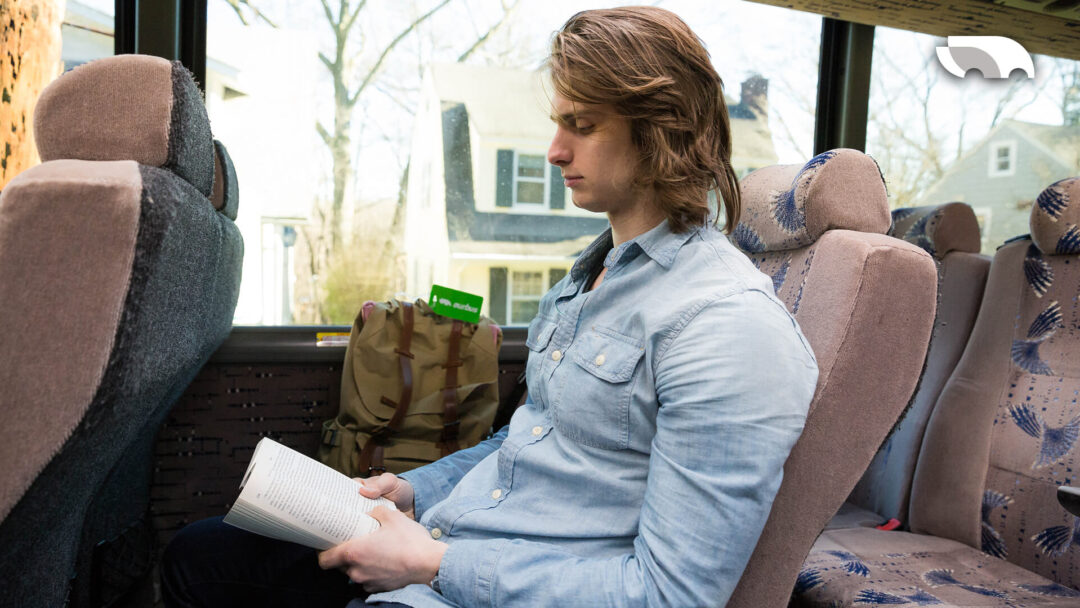
OurBus connections come down to one rule: only a connection booked as a single ticket is guaranteed. OurBus currently runs one connecting service, a shuttle from Brooklyn to Staten Island and Hamilton, NJ, that meets a bus continuing to Washington, DC. Two separate tickets are two separate contracts, and nobody holds the second bus for you.
Most riders never need this. It matters a great deal to the ones who do. A self-made transfer looks just like a real connection, right up to the moment the first leg runs late. Then the difference is the whole trip. We measured the one real connecting service against the route pages it touches on September 20, 2026, and read the rules on the OurBus FAQ the same day. What we found is a system that is simple once you know the rule, and expensive if you do not.
Which OurBus connections are actually guaranteed?
The ones you bought as a single booking. OurBus is direct about it: only connections booked as one ticket on the OurBus platform are guaranteed. A guaranteed connection is a trip where OurBus has sold you the whole journey, so it owns the problem when the first leg arrives late. A self-connect is one you assembled yourself from two separate bookings. Each ticket stands on its own departure time, and the second bus leaves when its timetable says. That difference sounds procedural until something goes wrong. Then it is the only thing that matters. On a self-connect, a late first leg earns you nothing on the second. As far as that second bus is concerned, you did not show up. This is not an OurBus quirk. Separately ticketed travel works the same way on almost every mode, such as a pair of cheap flights booked on two different tickets. What makes it surprising here is that one brand runs both legs, which invites a fair but wrong assumption that someone is watching the handover.
What is the Brooklyn to Hamilton, NJ shuttle?
It is the one connecting service OurBus operates, and it deserves a careful description, because the place name trips people up. A connecting service is a scheduled handover that OurBus sells and controls, rather than two tickets you happen to buy in sequence. This one runs from Brooklyn to Staten Island, then on to Hamilton, NJ. There it meets a bus that continues to Washington, DC. Note the state. This is Hamilton, New Jersey, in the Trenton area, and the pick-up is the Richard Stockton Travel Plaza on the southbound New Jersey Turnpike. It is not the Hamilton in upstate New York. That one is Colgate country, and it sits on a separate corridor with its own bus from Hamilton, NY to New York, NY. We flag this because the two Hamiltons are a real booking hazard: same name, different state, no shared stops.
From the New Jersey side, the onward leg is the bus from Hamilton, NJ to DC. We measured it on September 20, 2026 at about 172 miles and roughly three and a half hours, with a drop at Stadium-Armory Metro Station. The return bus from DC to Hamilton mirrors it. If your trip runs Brooklyn to Washington, the shuttle and the coach are sold to you as one journey, and the handover is OurBus’s problem rather than yours. That is the practical difference worth having. Stadium-Armory is a Metro station, so the last stretch into the city is a train ride rather than a third timetable to worry about. Compare that with a change you built yourself, where a late first leg leaves you holding a ticket that nobody is obliged to honor and a refund window that has already closed.
What happens if you build your own transfer?
You take on the timing risk yourself. How much risk depends almost entirely on the gap you leave. The punctuality figure is less reassuring than it first sounds. OurBus reports that more than 95% of trips depart within five minutes of schedule, which is a strong departure record. Departure is not arrival, however. Traffic, weather and road work all land on the arrival end, and OurBus treats delays from those causes, and from driver rest breaks, as operating facts rather than itinerary changes. So the question is not whether your first bus leaves on time. It is how late it can arrive before your second ticket is worthless. In our experience, anything under half an hour of slack is not a connection. It is a bet.
How much buffer should you leave between two tickets?
Leave 60 to 120 minutes on a highway corridor. The table below is our own planning guidance, not OurBus policy, derived from the published departure standard and the rule that no bus waits for a passenger. Treat it as a floor, not a target: a holiday weekend deserves more room than any row here suggests.
| Gap between scheduled arrival and next departure | What it survives | Our verdict |
|---|---|---|
| Under 30 minutes | Nothing. | Don’t book it. |
| 30 to 60 minutes | Ordinary traffic on a short corridor. | Risky outside off-peak hours. |
| 60 to 120 minutes | A first leg that arrives an hour late, or a bad stretch of I-95. | Workable. |
| Next scheduled departure, hours later | Almost anything short of a canceled leg. | Safest, and dull, which is the point. |
For example, a rider going from Philadelphia to Boston has no single OurBus route. They would pass through New York. Two tickets with a 25-minute gap are not a plan. They are a coin toss. That same rider with a two-hour gap is fine, and can spend the wait somewhere better than a curb. If the change happens in Midtown, the Port Authority Bus Terminal is the sensible place to sit it out. Count the walk between gates rather than assuming it away. One more limit applies to anyone trying to shave time off a change: you cannot board or exit at a stop that is not on your ticket, because passengers travel between the stops they bought.
What if your first leg is the one that goes wrong?
Then the missed bus rules take over, and on the same day they are kinder than most people expect. The Missed Bus Policy lets a missed ticket move to a later departure. It applies if seats are open and the bus you first booked has not yet finished its trip, and it can be used once. Cancellation itself closes 60 minutes before departure. A self-connect fails at the second ticket, not the first. By the time you know the first leg is running late, that second departure may already sit inside its own 60-minute window, and that is the point where the money stops coming back. Running a self-connect on a busy corridor is a different proposition from running one upstate. On the bus from NYC to DC or the bus from NYC to Philadelphia, the next departure is close enough that a bad morning stays fixable. On thinner routes it is not, and that gap is the real case for the boring buffer.
How should you plan a trip OurBus doesn’t run end to end?

Book the leg OurBus does well. Then choose deliberately for the rest, instead of improvising a change. So where should you start? Check what already exists before you assume you need a connection at all. The network reaches further than many riders realize: the bus from Philadelphia to DC is direct, and people routinely assume it needs a change in another city. For a solo traveler, the honest options are narrower than they look. You can treat the two legs as two separate days and sleep in the middle city. Alternatively, accept a long midday gap as the price of certainty. Both beat a tight transfer that turns one late bus into a lost evening.
For a group the math shifts. Every transfer multiplies by the number of people who might miss it, and a school group waiting on one late coach is a different problem from one traveler waiting on one late coach. A destination the scheduled network cannot reach in a single leg is exactly where stitching tickets together stops making sense. A private vehicle that drives your route on your schedule removes the change entirely. OurBus Charters handles that side of it, and its group transportation services cover exactly this case.
For everything the scheduled network does cover, check fares and book your seat, and keep it to one ticket wherever you can. Not sure which routes link up? Contact rider support before you book two.
Fact-checked by our editorial team against the OurBus FAQ and the route pages on September 20, 2026. Curious about us? The operator model post covers who drives each route and how they are vetted.
Frequently Asked Questions
Does OurBus guarantee connections between routes?
Only connections booked as one ticket on the OurBus platform are guaranteed. If you buy two separate tickets and the first leg arrives late, the second bus departs on its own schedule. Your second ticket is then treated on its own terms.
How many connecting services does OurBus run?
One. A shuttle runs from Brooklyn to Staten Island and Hamilton, NJ, connecting to a bus that continues to Washington, DC. Every other trip on the network is a direct, separately ticketed route.
Is the OurBus Hamilton stop in New Jersey or New York?
Both exist, and they are different places. The connecting shuttle serves Hamilton, New Jersey, near Trenton, using the Richard Stockton Travel Plaza on the southbound New Jersey Turnpike. Hamilton, New York is a separate upstate destination on its own route.
How much time should I leave between two OurBus tickets?
We suggest at least 60 to 120 minutes on a highway corridor. OurBus reports over 95% of trips departing within five minutes of schedule. Arrival times absorb traffic and weather, however, and no bus is held for a connecting passenger.
Can I get off partway to make my own connection?
No. Passengers must travel between the stops they purchased tickets for. To change a drop-off or pick-up point you follow the same procedure as rescheduling a ticket, which closes 60 minutes before departure.


No Comments