
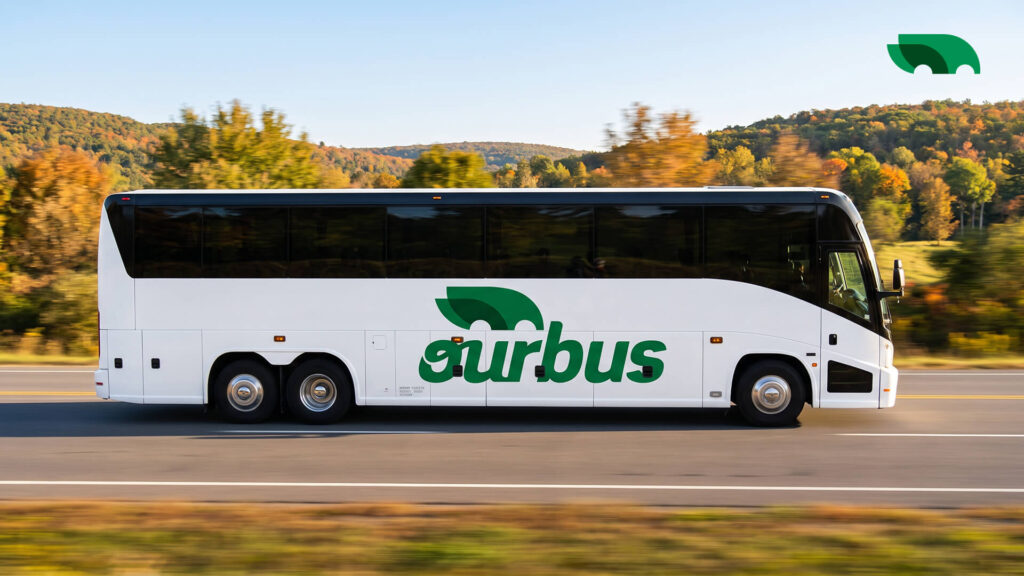
Pick the DC stop that matches where your day actually happens, not the one whose name you recognize. OurBus lists three drop-off points on the NYC to DC route: Union Station, Dupont Circle, and Stadium-Armory. Two of them sit on Metro’s Red Line and one opens the Blue, Orange, and Silver side of the system, and that split decides more DC visits than any map of the stops themselves ever will.
A note on method before the advice. The specific street locations live on the route page and on your ticket, and your booking confirmation is the final authority on where your bus stops, so we are not going to reproduce addresses here. What the route page cannot tell you is which stop serves which kind of day. Which stop saves you a Metro transfer, for instance, is knowable before you ever board, though nobody publishes it in one place. To build that map, we matched each OurBus stop against WMATA’s own station pages on August 27, 2026, and found a pattern worth planning around. Three questions settle it, and the third one surprises almost everyone.
Where Will You Spend Your Time in DC?
Start with your calendar, because each stop anchors a different slice of the city. Union Station is DC’s transit front door on the Capitol Hill side of downtown, and the OurBus arrival there puts you inside a real bus terminal rather than at a curb, steps from the city’s main rail hub. If your plans lean toward the Capitol end of the Mall, Senate-side meetings, or an onward train, this is your stop. Dupont Circle is the northwest neighborhood of embassies, row-house hotels, and office corridors, and it is the natural landing for anyone staying in NW or working downtown. Stadium-Armory is the easternmost of the three, out past Capitol Hill, and its value is less about the neighborhood than about what its Metro station unlocks, which is the subject of the next question. For example, a lobbying-day visitor sleeping near Dupont has no reason to ride past their own hotel to Union Station just because the name sounds central.
Which Metro Line Do You Need When You Step Off?
This is the question most riders never ask, and it is the one we can actually answer with data. When we checked WMATA’s station pages, we found Union Station and Dupont Circle are both Red Line stations, twins from a transit-planning view. Stadium-Armory is the outlier, served by the Blue, Orange, and Silver lines toward Largo, New Carrollton, Vienna, Franconia-Springfield, and Ashburn. So the three stops are really two systems. Anywhere on the Red Line, land at Union Station or Dupont and you are one seat from your destination. But the Smithsonian museum core is different: WMATA’s page for Smithsonian station lists Orange, Silver, and Blue service, not Red. Step off the bus at Stadium-Armory and you can ride to the museums with no transfer at all; arrive at either Red Line stop and you owe the system a transfer or a longer walk. The same logic covers Orange/Blue/Silver destinations in Northern Virginia. A stop that looks peripheral on the map turns out to be the shortcut, and that inversion is worth a minute of route-checking before you book.
What Kind of Arrival Do You Want?
The three stops feel different at the curb, and on some trips that matters more than geography. Union Station’s bus terminal is indoors, which is the arrival you want at midnight in January, or whenever “wait inside with coffee” beats “stand on a traffic island.” Dupont and Stadium-Armory are street-level stops in the OurBus pattern, quick to exit and quickest into a rideshare. Note two practical points. First, not every departure necessarily serves every stop, so treat the stop list as a menu the specific bus chooses from and confirm yours at booking. Second, searching a stop name in a maps app can surface more than one record for the same area; match the location printed on your ticket rather than the first pin you see. The DC to NYC return picks up at the same three points, so the decision you make for arrival usually repeats itself, in reverse, at the end of the trip.
Quick mapping, if you want the shorthand:
- Capitol Hill, an Amtrak connection, or a late-night arrival: Union Station.
- NW hotels, downtown offices, embassy row: Dupont Circle.
- Smithsonian museums or an Orange/Blue/Silver destination, transfer-free: Stadium-Armory.
- Not sure yet: Union Station is the safest default; it is the easiest to reorient from.
One reassurance before you overthink it. On a corridor running 11 buses a day, with a Metro station attached to every stop, a wrong choice costs you a transfer and twenty minutes, not the day. That said, the right choice costs nothing at all, and on a day trip those twenty minutes are a museum gallery or a second coffee. Do you know your first destination in DC? Then you already know your stop.
Frequently Asked Questions
Which DC stop is best for the museums?
Stadium-Armory, unintuitively. Smithsonian station sits on the Orange, Blue, and Silver lines, the same lines that serve Stadium-Armory, so the ride in is transfer-free. From the Red Line stops you will transfer or walk the Mall’s length.
Do all OurBus buses stop at all three DC locations?
Not necessarily; specific departures list their own stops. Check the stop shown for your departure when booking, and treat your confirmation as the authority. The fare, from $17 with 11 buses a day when we checked, does not change with the stop you choose.
Which stop should a first-time day tripper pick?
Union Station, for orientation value: you surface at a landmark every local can direct you from. If your day is museum-heavy, though, the Stadium-Armory trick above saves real time; our DC day trip breakdown shows how many usable hours the corridor gives you.
Both ends of this trip involve a choice, by the way. The NYC boarding side has its own logic, covered in picking your OurBus NYC stop. Match the right stop to each end, check fares on the NYC to DC route page, and the bus becomes the easiest decision of the whole trip. Questions before you book? OurBus rider support is there around the clock — contact them through the app.


No Comments